

Table of Contents
- Understanding Diecast Scales and Fast and Furious Replicas
- Identifying Hero Cars vs. Background Vehicles in Fast and Furious Diecast
- Jada Toys Fast and Furious Collection: Quality and Authenticity
- Grading Standards and Mint-in-Box Preservation
- How to Display Diecast Car Collections
- Fast and Furious Diecast Car Value Guide: Rarity and Investment Potential
- Building Your Collection: Starting and Curation Strategy
- Conclusion
- Frequently Asked Questions
Last Updated: September 4, 2026
A Fast and Furious diecast collection is more than a shelf of toy cars; it is a curated archive of cinema history. For collectors, the thrill lies in hunting down accurate replicas of Dom's Charger or Brian's Skyline, but the market can be overwhelming for newcomers. This guide from childrenstoycloset.com breaks down the essential knowledge for building a serious collection, from understanding scale ratios to spotting rare chase cars, so you can invest wisely and display your pieces with pride.

The franchise has spawned hundreds of diecast releases across multiple brands and scales. A common mistake is buying impulsively without a strategy, leading to a scattered assortment of little value. Instead, focus your collection around hero vehicles, authentic details, and pristine condition. Below, we cover the scales, the key brands, grading standards, and the investment potential of these miniature machines, giving you a framework to buy with confidence.
Understanding Diecast Scales and Fast and Furious Replicas
Diecast scale is the ratio between the model's size and the real car's dimensions. The most common scales for Fast and Furious replicas are 1:64, 1:24, and 1:18, each serving a different purpose in a collection. Understanding these differences is the first step to building a cohesive set rather than a random pile of cars.

1:64 Scale: The Standard for Fast and Furious Collections
The 1:64 scale is the undisputed workhorse of the Fast and Furious diecast world. This size, roughly three inches long, is the standard for brands like Hot Wheels and forms the backbone of most collections due to its affordability and sheer variety. Because the scale is so popular, manufacturers release multiple waves covering nearly every significant car from each film, making it the easiest scale to complete a comprehensive franchise set.
For example, the Hot Wheels Fast and Furious 25 Years of Fast & Furious Set of 5 celebrates a quarter-century of the franchise in this scale. At this size, details are simplified, but the iconic paint jobs and tampo graphics are usually accurate. These cars are ideal for casual display, play, and collecting every variant without breaking the bank.
1:24 and 1:18 Scale: Premium Detail and Investment Pieces
For collectors who prize detail over volume, the 1:24 and 1:18 scales are the premium tier. A 1:18 scale model can be over nine inches long, allowing manufacturers to include opening doors, detailed engine bays, functioning steering, and highly realistic interior stitching (peer-reviewed research). These are display centerpieces, not toys, and they command significantly higher prices.
Investment-wise, large-scale pieces from reputable brands hold their value well, especially if they are limited editions. A detailed 1:18 replica of the hero Charger becomes a statement piece. When you move into this tier, you are paying for the fidelity of the casting, the quality of the paint finish, and the accuracy of the interior detail, which justifies the higher cost for the serious collector.
Identifying Hero Cars vs. Background Vehicles in Fast and Furious Diecast
Not every car in the franchise is worth equal attention. The market clearly distinguishes between "hero cars," the stars of the screen driven by main characters, and background vehicles that fill traffic scenes. A smart collector guide focuses on hero cars, as they carry the most cultural weight and, consequently, the highest demand and resale value.
Hero cars like Dom's 1970 Dodge Charger or Brian's Nissan Skyline GT-R are the icons. A diecast of these cars is a direct connection to a memorable film moment. For instance, the Hot Wheels Fast and Furious '70 Dodge Charger is a recreation of the "soul of the entire series," a 900-horsepower legend that anchors any collection. When you are starting out, prioritize these central figures.
Background vehicles, while sometimes interesting for completists, are harder to identify and often lack the specific livery that makes a car recognizable. They are released in smaller numbers and appeal to a niche audience. For the average collector, spending on hero cars is a safer investment, as the demand is consistent and the connection to the franchise's history is clear.
Jada Toys Fast and Furious Collection: Quality and Authenticity
When discussing the Jada Toys Fast and Furious collection, the conversation centers on their larger-scale offerings and metal body construction. Jada has carved a niche by producing highly detailed 1:24 and 1:32 scale replicas that often feature opening parts and detailed chassis, appealing to those who want a display piece without the cost of a high-end resin model.
Jada's strength lies in their packaging and presentation, which often features striking artwork that appeals to collectors who keep items mint-in-box. Their cars frequently come with a display base or are mounted in a way that showcases the model. However, authenticity varies by release wave, so checking the specific casting and tampo details against film stills is a good habit. For a broad range of franchise cars, Jada is a solid, accessible option.
Grading Standards and Mint-in-Box Preservation
A Fast and Furious diecast collector guide is incomplete without discussing condition, as it is the single biggest factor in determining value. The hobby uses grading standards similar to comic books, where a car in "mint condition" with flawless packaging commands a premium over a "loose" car that has been played with. For serious investors, the box is as important as the car.
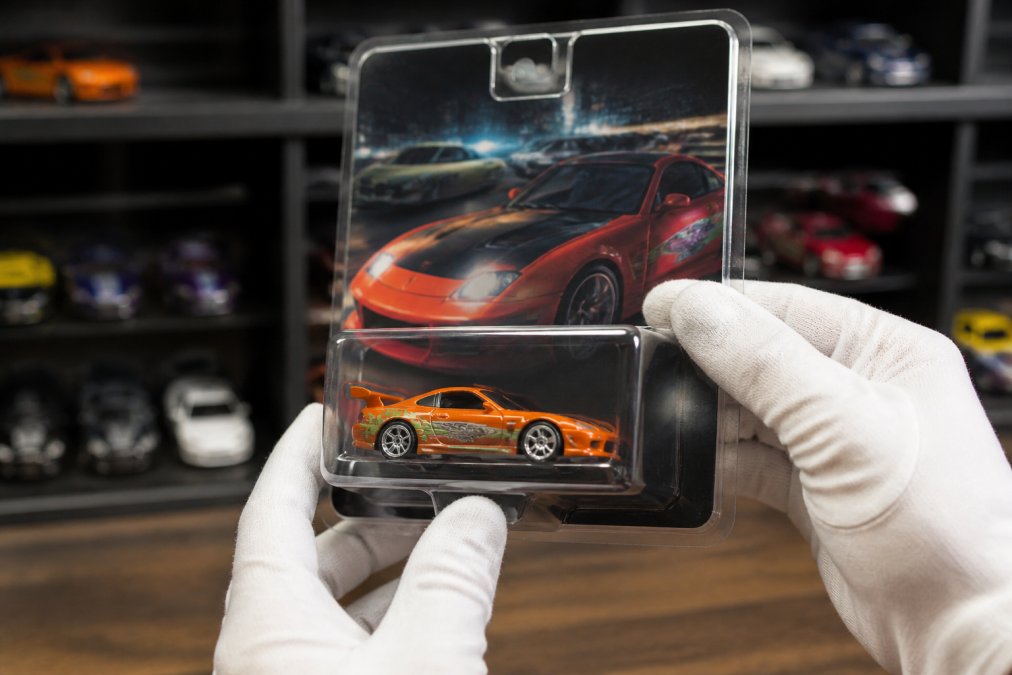
Collector Grade Criteria: What Determines Condition
Grading a diecast car involves inspecting both the car and its packaging. For the car, look for a flawless paint finish with no chips, scratches, or "rough" edges on the tampo printing. The chassis should be free of scuffs. For the packaging, the cardboard must be crisp with sharp corners and no creases, and the plastic blister should be clear and unbroken.
A "carded" car in collector grade condition is the holy grail. Any damage, such as a price sticker residue or a bent card corner, drops the grade and the value. When buying online, always ask for photos of the actual item, not just stock images, to verify the condition. This is where sourcing from a retailer that guarantees factory-sealed shipping, like childrenstoycloset.com, provides peace of mind for your investment.
Packaging Art and Tampo Details
The packaging art on Fast and Furious releases is a significant part of the appeal. Many collectors display cars carded specifically for the artwork, which often features the actor, the car, and the film's logo. The interplay between the card art and the car itself is a key part of the collectible's charm.
Tampo details refer to the printed graphics on the car, such as the sponsor logos, racing stripes, and character-specific modifications. Screen-accurate tampo is critical for authenticity. A common mistake is assuming all releases are identical; variations in tampo color or placement between release waves can make certain versions rarer and more valuable. Scrutinize these details to avoid overpaying for a common variant.
How to Display Diecast Car Collections
Once you have invested in high-quality pieces, displaying them correctly protects your investment and enhances your enjoyment. A thoughtful display setup prevents dust accumulation, UV damage, and accidental falls, all of which can degrade a car's condition over time.
Display Cases and UV Protection
The best display method for a serious collector is a dedicated display case with acrylic shelves. Acrylic is clearer than glass and less likely to shatter if bumped. More importantly, you should look for cases with UV-protective acrylic or place your display away from direct sunlight. Prolonged UV exposure will fade the vibrant paint finishes and yellow the plastic packaging, significantly reducing the market value of your collection (the NIH).
Storage Solutions for Long-Term Preservation
For cars that are not on display, storage is about climate control and physical protection. Store carded cars in sturdy plastic bins, standing upright like files, to prevent the cards from bending. Avoid attics or garages where temperature and humidity fluctuate, as this can cause the cardboard to warp and the metal to oxidize. For loose cars, individual compartments in a parts organizer prevent scratches from cars rubbing against each other.
Fast and Furious Diecast Car Value Guide: Rarity and Investment Potential
The Fast and Furious diecast car value guide is not a fixed list; it is a dynamic market influenced by rarity, condition, and demand. While most mainline releases hold modest value, specific variants can appreciate significantly. Understanding what drives scarcity is crucial for making smart purchases.
Release Waves and Limited Edition Chase Cars
Manufacturers release cars in waves, and within those waves, they often hide "chase cars." A chase car is a limited edition variant, often with a different paint job or premium wheels, produced in very small numbers. Finding one at retail is a major win, as they are highly sought after by collectors and can be worth several times the price of a standard release.
Limited edition sets, like the 25th-anniversary collection, also hold value due to their commemorative nature and complete packaging. These sets are produced once and never again, making them a finite resource. Tracking release waves and understanding which cars are chase pieces is a core skill for any investor in this niche.
Regional Release Variations and Market Value
A factor many new collectors miss is the impact of regional releases. A car sold exclusively in Japan or Europe may have different packaging or paint variations than the US release. These regional differences can create a secondary market where collectors pay a premium for a version they cannot find locally.
For example, the Hot Wheels Fast and Furious Fast Superstars Nissan Skyline GTR (BNR34) may come in a specialized line that is harder to source. When researching value, check the specific casting number and the region it was distributed in to understand its true rarity. Don't assume a car is common just because you see it frequently in your local store.
Building Your Collection: Starting and Curation Strategy
Starting a collection is exciting, but a clear strategy prevents wasted money and buyer's remorse. The goal should be a curated selection of cars that you value, not an exhaustive hoard of everything available. Focus on quality, authenticity, and your personal connection to the franchise.
Choosing Hero Vehicles for Your First Pieces
Begin with the most recognizable hero vehicles. These are the cars that define the franchise for most fans. A good starting trio would be Dom's 1970 Dodge Charger, Brian's Nissan Skyline GT-R, and the 1995 Mitsubishi Eclipse from the first film. These are the cars that people ask about when they see your collection.

The Hot Wheels Fast & Furious Nissan Skyline GT-R and the 1995 Mitsubishi Eclipse are perfect first acquisitions. They anchor your collection in the franchise's origins and are guaranteed to remain popular. Purchasing these from a reputable source ensures you get the authentic, factory-sealed product you are paying for.
Digital Inventory Tracking and Authenticity Verification
As your collection grows beyond a dozen cars, tracking what you own becomes essential. A simple spreadsheet is a start, but dedicated apps for collection management allow you to log the casting, scale, condition, and what you paid for each item. This is vital for insurance purposes and for avoiding duplicate purchases when you are hunting for new releases.
Authenticity verification is another reason for meticulous records. Knowing the specific release wave and regional variant of your car helps you spot counterfeits. If you are buying from a third-party marketplace, compare the tampo details and packaging quality against a verified example from your own collection or a trusted retailer's listing to ensure you are not buying a fake.
| Collection Aspect | Key Action | Primary Benefit |
|---|---|---|
| Scale Selection | Focus on 1:64 for variety, 1:18 for detail | Balanced collection value |
| Car Choice | Prioritize hero cars over background vehicles | Higher demand and resale |
| Condition | Insist on mint-in-box, factory-sealed items | Preserves long-term value |
| Display | Use UV-protected acrylic cases | Prevents fading and damage |
| Inventory | Log every car in a digital tracker | Prevents duplicates, aids insurance |
Conclusion
Building a Fast and Furious diecast collection is a rewarding pursuit that blends a love for cinema with the precision of model collecting. By focusing on hero cars, understanding scale and grading, and protecting your pieces from the elements, you can create a collection that is both personally meaningful and financially sound. The key is to buy with intention, prioritizing authenticity and condition over sheer volume.
Finding these specific, factory-sealed models can be a challenge, but sourcing from a specialized retailer makes all the difference. childrenstoycloset.com offers a curated selection of Hot Wheels Fast and Furious series, ensuring you receive authentic, mint-condition items ready for display. Get started with childrenstoycloset.com and secure the hero cars that will define your collection.
Frequently Asked Questions
What is the difference between 1:64 and 1:24 scale Fast and Furious diecast cars?
1:64 scale models are the standard for most Fast and Furious diecast collections, measuring roughly 3 inches long and offering affordable entry points for collectors. 1:24 scale models are significantly larger (around 8 inches), feature more intricate interior detail, opening parts, and rubber tires, making them premium investment pieces. Choose 1:64 for broad collection building; 1:24 for hero vehicles like Dom's Charger or Brian's Skyline that deserve showcase display.
How do I identify rare and valuable Fast and Furious diecast cars?
Rarity comes from limited release waves, chase car variants, and regional exclusives. Check the casting number on the base and compare packaging art against official databases. Hero vehicles (cars featured prominently in films) command higher market value than background vehicles. Mint condition with original carding significantly increases value. Limited edition sets like the Hot Wheels 25 Years of Fast & Furious Set appreciate faster than standard releases.
What should I look for in Jada Toys Fast and Furious collection models?
Jada Toys Fast and Furious collection models are known for detailed casting, accurate paint finishes, and functional features like opening hoods and doors. Verify authenticity by checking packaging consistency, tampo quality (printed graphics should be sharp), and chassis markings. Factory-sealed condition is critical, inspect the clamshell for tampering or damage before purchase. Jada's 1:24 scale pieces offer excellent assembly quality and interior detailing.
How do I know if my diecast car is factory-sealed and authentic?
Authentic factory-sealed diecast cars have intact, unbroken clamshell packaging with no signs of opening. Check that the cardboard backing is pristine with no creases or adhesive residue. Verify the tampo (printed graphics) is crisp and properly aligned. Examine the casting for consistent paint finish and correct mold marks. Counterfeit models often show poor paint quality, misaligned graphics, or loose parts inside the packaging. Purchase from verified retailers like Childrenstoycloset.com to guarantee authenticity.
What are chase cars and why do collectors seek them?
Chase cars are rare variant castings within a release wave, typically produced in smaller quantities with different paint finishes, wheels, or interior details than standard versions. Collectors pursue chase cars because their scarcity drives market value significantly higher. A standard release might cost $12, while its chase variant could exceed $50 or more. They're identified by different color schemes or special tampo patterns on otherwise identical molds.
How should I store my Fast and Furious diecast collection long-term?
Keep models in original packaging when possible to preserve value and condition. Store in a cool, dry environment away from direct sunlight, UV exposure fades paint and degrades packaging. Use acrylic display cases with UV protection for showcase pieces. For loose models, store in individual compartments or acid-free containers to prevent paint chipping. Maintain humidity between 30-50% to prevent rust on metal chassis and rubber tire degradation. Rotate display pieces occasionally to ensure even light exposure.
This article was written using GrandRanker