

Table of Contents
- The Acceleracers Market in 2026: Why These Models Are Hard to Find
- How to Identify Rare Hot Wheels: Castings, Co-Mold Wheels, and Production Runs
- The Most Expensive Hot Wheels Acceleracers Models and What They Sell For
- Where to Buy: Retail Distribution, Secondary Market, and Auctions
- Beyond the Usual Sites: An Uncanny Collectibles Alternative for Rare Models
- Authentication Guide: Spotting Fakes, Repacks, and Resealed Cards
- Condition, Packaging, and Storage: Protecting Your Investment
- Frequently Asked Questions
Last Updated: September 12, 2026
The Acceleracers Market in 2026: Why These Models Are Hard to Find
The search for rare Acceleracers models has become one of the most frustrating hunts in diecast collecting, and the reason is simple arithmetic: a fixed supply of early-2000s castings meets a growing pool of adult collectors chasing series completion. This guide from childrenstoycloset.com covers where those models actually surface, how to verify them, and what to pay. Below, we'll show you exactly which channels still produce genuine finds and which ones mostly produce heartbreak.
Acceleracers launched alongside the animated franchise in the early 2000s and was discontinued years ago (mattel.com). No reissue program has restored the original carded stock. That means every mint-in-box example sitting in a collection today came from a production run that ended roughly two decades ago.
Three forces keep prices climbing:
- Retail distribution is gone. You cannot walk into a mainstream retailer and find original carded Acceleracers. Retail distribution for this line ended with the series.
- Scalping moved online. When sealed cases do surface, resellers buy them fast and list individual models at marked-up prices.
- Series completion drives demand. Collectors who own eight of ten castings will pay disproportionately for the last two.
The collector community tracks this through wikis, forums, and price guides, but the information is fragmented. A model identification question that takes three forum threads to answer should take one page.
How to Identify Rare Hot Wheels: Castings, Co-Mold Wheels, and Production Runs
Learning how to identify rare Hot Wheels starts with three things you can check in under a minute: the casting itself, the wheel type, and the production markings on the base. A casting is the specific die-cast body design; two cars from the same series can share a theme but use entirely different castings, and some castings were produced in far smaller numbers.
Co-mold wheels are the fastest visual tell. These are wheels molded from two different materials, typically a hard plastic hub with a softer tire section, and they appear on specific Acceleracers releases. A model that should carry co-mold wheels but shows plain plastic wheels has either been swapped or is a later variant, and both scenarios change the value.
Reading Base Codes and Chassis Markings
The base code is a stamped or printed identifier on the underside of the chassis. It typically encodes a production period and a batch reference. Collectors use base codes to date a casting, confirm which wave it belongs to, and detect mismatches between a car and its packaging. If the base code on the car does not fit the production window of the card it sits on, that is a repack until proven otherwise.
Tampos, Paint Variations, and Packaging Errors That Add Value
Tampos are the printed graphics applied to the body of a die-cast car. On Acceleracers models, tampo placement varies between production runs, and certain misaligned or alternate-color tampos are collected as variants. Paint variations work the same way: a shade difference that looks like a defect to a casual buyer can be a documented variant worth a premium. Packaging errors, such as a car carded with the wrong backing or a misprinted series name, fall into the same category.
The Most Expensive Hot Wheels Acceleracers Models and What They Sell For
The most expensive Hot Wheels Acceleracers models are consistently the team-signature castings: the hero cars tied to a specific racing crew. These were produced in the smallest numbers, appeared in the most marketing material, and are now the hardest to complete a set without.
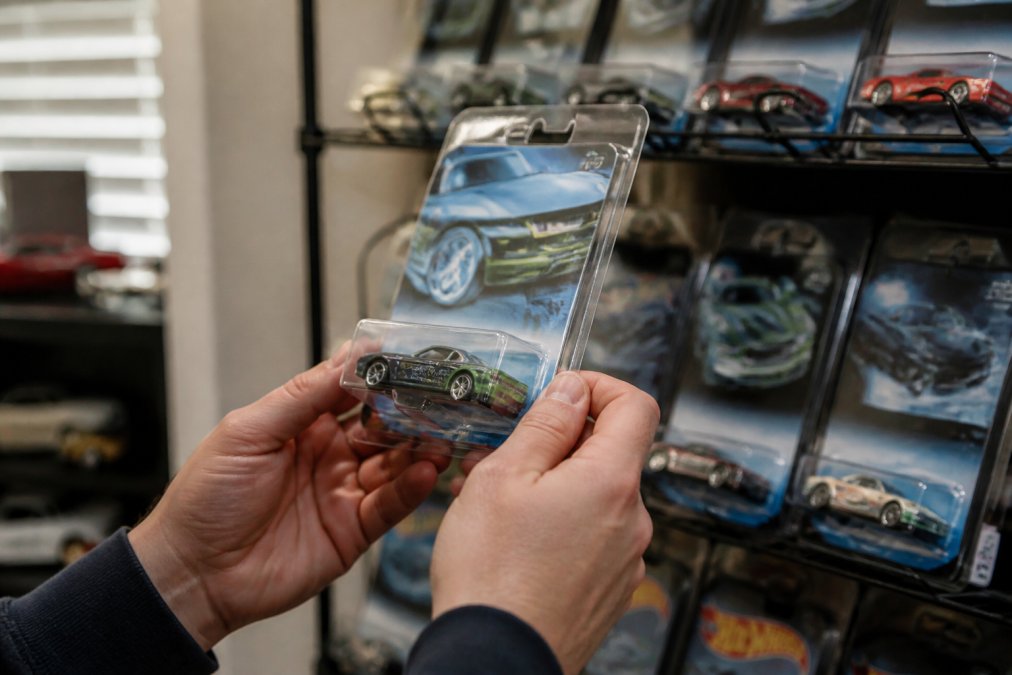
The TEKU Battle Spec sits at the top of that hierarchy. It is the signature vehicle of the TEKU racing team and the single most requested casting from the line. Original carded examples in strong condition are genuinely rare, and that combination of demand and scarcity is what pushes it above everything else in the series.

Below it, the tier breaks down by casting popularity and production volume:
| Model | Why It Commands a Premium | Typical Condition Found |
|---|---|---|
| TEKU Battle Spec | Team-signature casting, smallest production run | Carded, often with shelf wear |
| Drift Tech | Distinctive drift-inspired design, strong fan following | Loose and carded |
| Hollowback | Open skeletal frame, visually unique in the lineup | Carded, frequently with bent corners |
| Accelium | Sleek high-tech design, completes many sets | Carded, bent corners common |
Notice the pattern in the right-hand column. Original carded Acceleracers stock almost always carries some packaging flaw, because it has been stored, moved, and handled for two decades. A bent card corner is not a red flag; it is the norm. A perfectly flat card with sharp corners on a genuinely vintage casting deserves extra scrutiny, not extra money.
Prices for these models move with the secondary market, so treat any figure you see as a snapshot rather than a fixed value. What matters more is knowing which tier a casting belongs to before you negotiate.
Where to Buy: Retail Distribution, Secondary Market, and Auctions
Retail is a dead end for original Acceleracers. The secondary market is where every genuine transaction happens, and it splits into two very different experiences: online marketplaces and in-person hunting.
Online Marketplaces and Collector Listings
Online marketplaces and dedicated collector listings carry the deepest inventory and the best search tools. You can filter by casting name, compare photos across multiple sellers, and check a seller's history before committing. The trade-off is that you are competing against every other collector in the world on the same listing, and auctions in particular can push a mid-tier casting well past its realistic market value.
A few habits separate good buyers from frustrated ones:
- Ask for photos of the base code before bidding on anything described as original.
- Compare the card back to the car. Mismatches are the single most common repack signal.
- Check whether the seller shows the packaging from multiple angles. One photo is not enough.
- Set a ceiling price before the auction starts and walk away when it is hit.
Flea Market Finds and Local Swap Meets
Flea markets and local swap meets are where the genuine bargains still exist, precisely because most sellers do not know what they have. A box of mixed die-cast at a stall is often priced per piece with no regard for casting. This is where a collector with a good eye for tampos and base codes has a real advantage.
The catch is volume. You will sort through a lot of common models to find one Acceleracers casting, and the good stalls get picked over early. Arrive at opening, bring a reference list of the castings you still need, and carry a small magnifier for reading base codes in poor light.
Beyond the Usual Sites: An Uncanny Collectibles Alternative for Rare Models
If you have been hunting an uncanny collectibles alternative for rare models, the practical answer is a specialist retailer that holds factory-sealed stock rather than a general marketplace. The difference matters most on the two things collectors get burned on: authenticity and condition.
childrenstoycloset.com is a specialized online retailer focused on collectible diecast model cars, with inventory spanning Hot Wheels, Disney Cars, Greenlight, and Auto World across series including Acceleracers, Fast and Furious, and Retro Entertainment. For Acceleracers hunters specifically, the catalog carries the castings that are hardest to source elsewhere:
- Hot Wheels AcceleRacers TEKU Battle Spec Diecast Model Car at $100.00, the team-signature casting at the top of the value tier.
- Hot Wheels AcceleRacers Drift Tech Diecast Model Car at $60.00, the drift-inspired design with a strong following.
- Hot Wheels AcceleRacers Hollowback Bent Card Corner Diecast Model Car at $30.00, the open-frame casting, honestly described with its card flaw.
- Hot Wheels AcceleRacers Accelium Bent Card Corner Diecast Model Car at $30.00, a set-completer at an accessible price.
That last point is worth pausing on. Listings that state "bent card corner" in the product title are doing you a favor. The most common complaint collectors raise about other sellers is being told a model is mint when the packaging was clearly opened or damaged. A retailer that names the flaw up front is telling you how it grades its own stock.


The trade-off is real: a specialist retailer prices for verified condition and sealed shipping, so you will usually pay more than the cheapest loose listing on a general marketplace. If you are buying to complete a set and keep it, that premium buys certainty. If you are buying to open and display loose, a cheaper marketplace listing may serve you just as well.
Authentication Guide: Spotting Fakes, Repacks, and Resealed Cards
Authentication is where most buyers lose money, and the good news is that almost every fake fails a simple physical check. Work through these in order:
- Check the base code against the card. A production mismatch is the strongest repack indicator.
- Inspect the blister seal. Original seals show consistent, factory-pattern adhesion. A resealed card shows uneven glue lines, lifting edges, or residue.
- Look for card wear patterns. Genuine vintage cards wear at the corners, edges, and hanging hole. A flawless card on a two-decade-old casting is suspicious.
- Verify the wheel type. Confirm co-mold wheels where the casting should have them.
- Compare tampo placement to documented examples of the same casting and wave.
- Check the card back for the correct series branding and any printing that does not match the era.
- Ask for a photo of the car out of the blister if the seller claims it is unopened. A refusal tells you something.
Repack is the term for a common or damaged car placed on a card belonging to a rarer model. It is the most frequent form of deception in this hobby because it requires no manufacturing skill, only a heat source and patience. Resealed cards sit one step up in effort and one step down in detectability.
Condition, Packaging, and Storage: Protecting Your Investment
Condition grading in this hobby runs from loose through carded to mint in box, and the gap between adjacent grades can be substantial for the same casting. Mint in box means the packaging is intact with no significant creasing, the blister is sealed, and the car is untouched. Loose versus carded is the first decision every collector makes, because a loose car cannot be upgraded back to carded condition later.
Storage decisions you make today determine what your collection is worth in ten years:
- Keep carded models out of direct sunlight (si.edu). UV fades card stock and can yellow plastic blisters.
- Store flat and stacked with support between layers, not leaning, which bows cards over time.
- Control humidity. Damp storage damages card stock and accelerates corrosion on metal bases.
- Handle by the card edges, never the blister face, to avoid pressure marks.
- Keep a written inventory with base codes and purchase dates, so provenance is documented if you ever sell.
For models you intend to display loose, keep the original card and blister in a labeled sleeve. Packaging that stays with the car preserves a meaningful share of its resale value, and separating them is the most common regret collectors report.
The challenge with rare Acceleracers models is not knowing they are valuable; it is finding genuine examples in condition you can trust, from sellers who describe flaws honestly. That is the gap childrenstoycloset.com was built to close, with a catalog spanning Hot Wheels, Disney Cars, Greenlight, and Auto World, factory-sealed shipping so cases arrive intact, and inventory that includes the hard-to-find Acceleracers castings other retailers rarely stock. Get started with childrenstoycloset.com and build the collection you have been chasing.
Frequently Asked Questions
Which Hot Wheels Acceleracers car is the most expensive?
The TEKU Battle Spec consistently ranks among the most expensive Acceleracers castings, with carded examples often commanding the highest prices in the series. Other top-value models include the Hollowback and Drift Tech, especially when found in mint-in-box condition with unpunched cards. Prices vary widely based on condition, packaging, and paint variations, so always check recent sold listings on collector marketplaces before buying or selling.
How can I verify if an Acceleracers model is authentic?
Check the base code and chassis markings first. Authentic Acceleracers castings have consistent stamping that matches the production run. Inspect the card for factory sealing, correct tampos, and original artwork without signs of re-gluing. Look for co-mold wheels that match the series specification. If buying online, request close-up photos of the base, card edges, and blister seal before committing, and compare against known authentic examples in collector forums.
What are the best online marketplaces for rare diecast cars?
Specialist diecast retailers, collector forums, and auction sites are the main channels for rare Acceleracers models. Specialist retailers often provide factory-sealed shipping and clearer condition grading, while auction sites offer variety but require careful vetting. Always review seller feedback, ask for additional photos, and confirm return policies. For hard-to-find castings, setting up saved searches with email alerts helps you catch new listings quickly.
Are there specific packaging variations that increase Acceleracers value?
Yes. Packaging errors such as misprinted cards, wrong character artwork, or incorrect series branding can significantly increase value because they represent limited production anomalies. Unpunched cards, factory-sealed blisters, and mint-in-box condition also raise prices. Loose versus carded matters too: a carded example in pristine condition typically sells for several times more than the same casting loose. Store carded models upright in a dry, UV-protected display to preserve value.