

Table of Contents
- Why Identifying Original AcceleRacers Cars Matters
- AcceleRacers Original Packaging: What to Inspect
- AcceleRacers Diecast Markings: The Core Identification Guide
- AcceleRacers Reproduction vs Original: Spotting Fakes
- Hot Wheels AcceleRacers Checklist for Loose Cars
- Team and Faction Verification
- Common Authentication Mistakes Collectors Make
- Frequently Asked Questions
Last Updated: October 6, 2026
Why Identifying Original AcceleRacers Cars Matters
To identify original acceleracers diecast cars requires more than spotting a familiar design. The early-2000s Hot Wheels series is now a genuine collector's market, and distinguishing authentic pieces from reproductions, reissues, and counterfeits separates a solid investment from a costly mistake.

Loose original cars command premiums and sealed packaging is rarer still, but counterfeits circulate and sellers misrepresent condition. This guide breaks down the marks, materials, and details that prove you're holding an original AcceleRacers casting.
Original AcceleRacers cars share specific manufacturing signatures. The base casting, paint, wheels, and card stock all tell a story, learn to read it and you'll know what you're buying.
AcceleRacers Original Packaging: What to Inspect
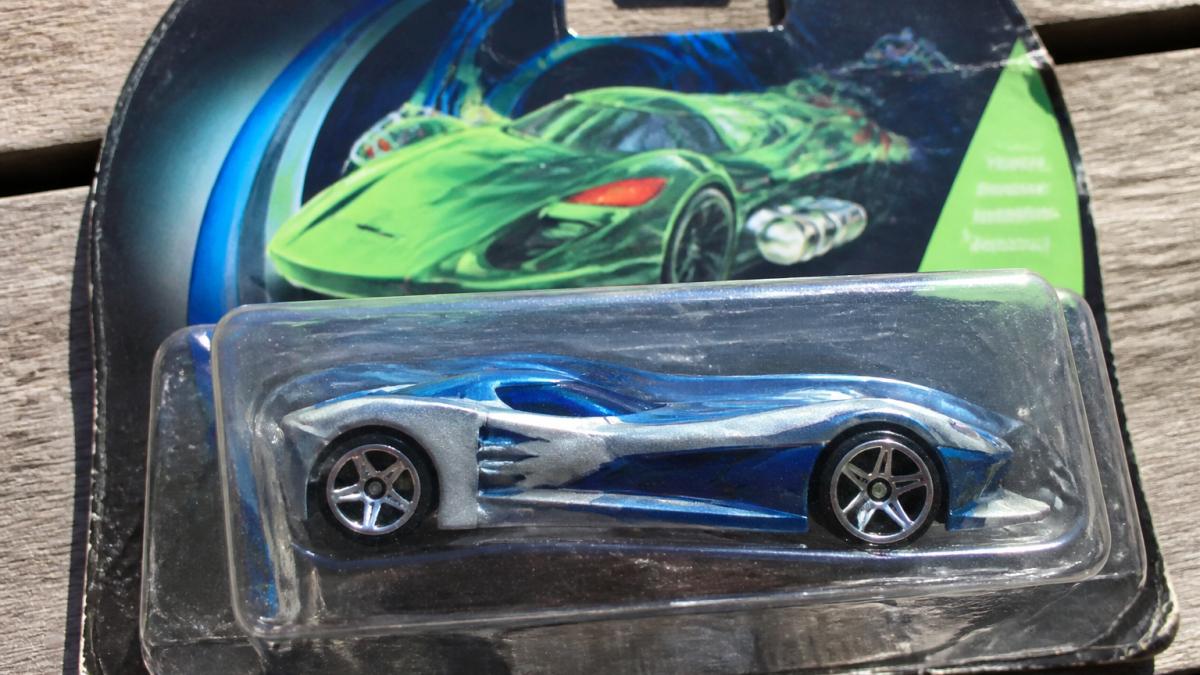
Original AcceleRacers packaging is your first clue: the card, the bubble, and how they're assembled reveal whether you're holding a genuine 2005-2006 release or something made later.
Card Stock and Printing Quality
Original AcceleRacers cards use a specific paper weight and finish: substantial but not heavy, with a slight sheen under bright light.
Counterfeit cards use cheaper paper that feels thin or waxy, with fuzzy or misaligned printing.
Original cards have a smooth, uniform texture; reprints may feel too glossy or too matte. Authentic faction colors (Silencerz blue, Technetium silver, Metal Maniacs red) should be vibrant but not oversaturated.
Bubble Condition and Clouding
The plastic bubble is a major authentication point.
Counterfeit bubbles often show cloudiness, haze, or uneven clarity.
Check the bubble for dents, creases, or pressure marks. Minor imperfections are normal, but deep dents or multiple pressure points suggest the package was opened and resealed.
AcceleRacers Diecast Markings: The Core Identification Guide
The car itself holds the most reliable authentication clues: specific marks, paint application, and wheel construction that reproductions struggle to replicate.
Base Casting and Production Details
Flip the car over. Original AcceleRacers bases include Mattel copyright marks, the casting year (usually 2004 or 2005), and sometimes a country of origin mark.
Counterfeit bases often have inconsistent marking placement, misspelled text, or missing details, and the metal may feel lighter or show seams.
Look for the car name and faction designation on the base.
Paint Application and Finish
Examine the paint under bright light for even color saturation, clean lines where colors meet, no brush marks or drips, and a consistent finish on all painted surfaces.
Counterfeits show paint irregularities: uneven coverage, color variations, or application marks. Original paint is machine-applied for uniform results; hand-painted or poorly applied paint is a red flag.
Check the windows and clear plastic parts. Originals use clear, colorless acrylic; cloudy, yellowed, or tinted windows suggest age, poor storage, or a counterfeit using inferior materials.
Wheels and Axle Construction
Wheels are critical. Original AcceleRacers use specific wheel designs matching the faction and era, spin freely but not loosely, and have metal axles fitting snugly into the hubs.
Original wheels have specific spoke patterns, trim rings, and center caps, with consistent, unblemished paint or chrome.
The axle connection should be tight. Wheels that spin too freely or wobble suggest heavy play or a worn axle; original sealed cars spin smoothly with slight resistance.
AcceleRacers Reproduction vs Original: Spotting Fakes
Most content stops at "watch out for fakes" without explaining what separates an original 2005-2006 release from a later reissue, a custom repaint, or a deliberate counterfeit. That distinction matters, because each category has a different value and authentication path.
Original Run (2005-2006): The Baseline
Original AcceleRacers cars were released during the animated series run, roughly 2005 through 2006, the cars collectors mean when they say "original." Key markers:
- Base copyright shows 2004 or 2005 (the casting year, which can precede the release year).
- Mattel branding is present and cleanly impressed.
- Card back carries the 2005 or 2006 copyright and that era's faction imagery.
Hit all five and you have the baseline original; everything else is a variation, and the variation type determines value.
Later Reissues: Genuine, But Not Original
Hot Wheels has reused AcceleRacers castings in later releases, legitimate Mattel products, but not original-run cars. The tell is the date code:

- Base or card copyright shows a year after the original window (commonly 2010 or later).
- Packaging graphics may be updated, simplified, or missing the original faction card art.
- Wheel and paint specs can differ slightly from the 2005-2006 tooling even when the casting looks identical.
Reissues are worth less because they're newer and more common. Sellers sometimes list them as "original AcceleRacers" since the casting is the same, the date code is your defense: check the base first, then the card.
Custom Repaints and Modified Cars
Customs are original castings that a collector or customizer has repainted, re-wheeled, or detailed. They aren't counterfeits, but they aren't factory-original and trade at a discount.
Signs of a custom:
Hot Wheels Acceleracers Metal Maniac Rat-ified Bent Corner Diecast Model Car →
- Paint edges that are soft or show brush or airbrush texture under raking light.
- Color that doesn't match any documented factory release for that casting.
- Wheels correct in style but wrong for the model's original tooling.
A custom can be a beautiful display piece, it just shouldn't be priced or represented as factory original.
Deliberate Counterfeits: The Hardest Category
True counterfeits copy the original design but cut corners on materials, printing, and casting. They're the rarest category and hardest to confirm from photos alone. Common patterns:
- Card stock that feels thin, waxy, or wrong in sheen versus a known original.
- Printing that is fuzzy, misaligned, or off in faction color.
- Bubble plastic thicker, thinner, or hazier than original acrylic.
The Decision Order That Saves You Money
When trying to place an AcceleRacers car, run this order:
- Check the base date code. Original window is 2004-2005 casting years.
- Check the card copyright. Original window is 2005-2006.
- Compare wheel tooling to the casting's known original wheels.
- Compare paint color and finish to verified reference photos of that exact model.
- Only then evaluate condition and price.
If steps 1 and 2 point to the original window and steps 3 and 4 match, you're almost certainly holding an original. If either date falls outside the window, it's a reissue no matter how original it looks, that distinction resolves most confusion in this hobby.
Hot Wheels AcceleRacers Checklist for Loose Cars
Loose cars require a different approach: you can't inspect packaging, so focus entirely on the casting, paint, wheels, and markings.
Use this checklist when evaluating a loose original AcceleRacers car:
- Base casting is smooth with no rough edges or excess metal
- Copyright year on base matches original release period (2004-2005)
- Mattel marking is clear and deeply impressed
For loose cars, compare directly to verified original photos. Many collector communities maintain reference galleries showing original AcceleRacers castings from multiple angles, if your car matches in every detail, you're holding an original.
Team and Faction Verification
Faction is one of the most reliable authentication layers on an AcceleRacers car, but only if you know the actual roster and each faction's visual codes. Here's the checkable version.
The AcceleRacers universe is built around four main factions, plus the human teams that race against them. The factions on cars and packaging are:
- Silencerz, the covert faction, associated with blue and silver, smooth aerodynamic bodywork, and low-profile styling.
- Technetium, the high-tech faction, associated with silver and chrome finishes and futuristic detailing.
- Metal Maniacs, the raw, aggressive faction, associated with red and metallic finishes and exposed-mechanical styling.
What to Actually Check
Faction verification means matching four specific things:
- Faction logo on the card. Crisp, correctly colored, and positioned consistently with other cards from the same release wave.
- Faction logo or marking on the car. Many castings carry a faction mark on the base, body, or both, sharp and correctly colored.
- Color palette. A car claiming to be Silencerz but painted in Metal Maniacs red is a mismatch worth investigating.
- Casting-to-faction assignment. A casting that appears under one faction in your references shouldn't appear under a different faction on the car you're inspecting.
The Roster Check
This is the step most collectors skip. Before you buy, confirm the casting was actually released under the faction the seller claims. If a car is presented as Silencerz but your references show that casting only under Metal Maniacs, you've found a mislabel, a custom, or a counterfeit, any of which changes the value.
A practical roster check:
- Identify the casting name from the base or card.
- Look it up in a trusted collector reference or gallery.
- Confirm the faction assignment for the specific release year.
If casting name, release year, and faction all line up, verification is done. If any one is off, treat the car as unverified until you can explain the discrepancy.
Faction Color and Logo Red Flags
Counterfeit and custom cars most often fail on faction details because they're easy to approximate but hard to replicate exactly. Watch for:
- Faction colors slightly off, too saturated, too muted, or shifted in hue.
- Logos with the right shape but wrong size or placement.
- Faction marks surface-printed rather than integrated into the casting or decal layer.
Why Faction Verification Matters for Value
Faction assignment affects how collectors categorize and price a car: a casting under one faction may be common, while the same casting under a different faction or release wave may be scarce.
Common Authentication Mistakes Collectors Make
Collectors often misidentify cars by focusing on the wrong details.
Ignoring the card: Original packaging is valuable authentication evidence.
Overlooking wheel details: Wheels are easy to replace.
Trusting seller claims: A seller's word is not authentication.
Comparing to poor-quality photos: Use clear, well-lit photos from trusted collector sources.
When you're ready to add original AcceleRacers cars to your collection, start with these verification steps. We stock original carded AcceleRacers examples, including the Hot Wheels AcceleRacers Drift Tech, a rare original casting that's increasingly difficult to source. We also carry examples with condition notes, like the Hot Wheels AcceleRacers Metal Maniac Rat-Ified with bent card corner, so you know exactly what you're getting.
Learning to identify original acceleracers takes practice, but the details are learnable.
Frequently Asked Questions
How can you tell if an AcceleRacers car is original?
Original AcceleRacers cars have consistent, crisp base markings with the Hot Wheels logo, country of origin, and year of release clearly stamped. Check for uniform paint application without drips or overspray, proper wheel fit and rotation, and packaging that shows no signs of resealing. Compare your car against verified reference images from early-2000s releases to confirm casting accuracy and faction details like Silencerz or Technetium team markings.
What markings should you look for on an original AcceleRacers car?
Look for the Hot Wheels brand name, scale designation (1:64), production year, and country of manufacture stamped on the base. Original AcceleRacers cars also feature faction identifiers and character names on their bases. Paint lines should be clean and precise, with no bleeding between colors. The card back should display matching production codes and series numbering that correspond to official AcceleRacers lineup documentation.
How can you tell whether an AcceleRacers car is a reproduction or custom?
Reproductions often have softer, less detailed base markings and inconsistent paint application. Customs may show evidence of repainting, wheel replacement, or casting modifications. Original AcceleRacers cars have sharp, factory-precise details and unaltered wheels. If packaging is present, examine the card back for printing clarity and color accuracy. Reproductions frequently show registration shift in multi-color printing and lower-quality bubble material that clouds more easily.
Did AcceleRacers cars come in different packaging?
Yes. Original AcceleRacers cars were released across multiple series with packaging variations including different card designs, faction-specific artwork, and regional printing differences. Early releases featured specific bubble styles and card stock thickness that changed over the series run. Some cars were available in both carded and loose formats. Packaging date markings and production codes on the card back help confirm which series and release window your car represents.