

Table of Contents
- Why Greenlight Models Are a Smart Starting Point
- Greenlight Diecast Scales Explained: 1:64 and Beyond
- What You Need to Start Collecting Greenlight Models
- Step 1: Choose Your Focus With the Best Greenlight Series for Beginners
- Step 2: How to Spot a Greenlight Chase Car and Other Rarities
- Step 3: Check Quality and Spot Fakes Before You Buy
- Step 4: Store, Display, and Care for Your Collection
- Your First Greenlight Purchase: Where to Start
- Frequently Asked Questions
Last Updated: September 9, 2026
Why Greenlight Models Are a Smart Starting Point
Greenlight models offer a compelling balance of affordability, detail, and variety that makes them ideal for new collectors.

Collecting greenlight models for beginners starts with understanding the brand's focus on American vehicles, pop culture tie-ins, and a production system that rewards patient hunters. Most models retail between $8 and $15 (greenlighttoys.com).
Greenlight Diecast Scales Explained: 1:64 and Beyond
Greenlight diecast scales explained simply: the brand's primary focus is 1:64 scale, with occasional forays into larger formats. A 1:64 scale model measures approximately 2.5 to 3 inches long, depending on the real vehicle's dimensions.
Stick with 1:64 and you can display dozens of models on a single shelf. Greenlight also produces some 1:43 and 1:18 models, but these are less common and reserved for special releases. For beginners, committing to 1:64 keeps things simple and affordable.
What You Need to Start Collecting Greenlight Models
Starting a collection requires surprisingly little equipment: a reliable source for factory-sealed models, a basic display case, and a system for tracking what you own.
Your budget for the first month should cover 3 to 5 models plus a display solution. Start small, learn what you enjoy, then expand deliberately.
The hobby's community guidelines on starting collections emphasizes that a focused approach produces more satisfying results than scattered buying. A display case with individual slots protects your models from dust and accidental damage while making the collection easy to view.
Step 1: Choose Your Focus With the Best Greenlight Series for Beginners
The best Greenlight series for beginners are those with clear themes and manageable production runs. The Hollywood series offers instantly recognizable vehicles from television and film, while the Retro Entertainment line covers classic cars with period-correct graphics.
Muscle cars and vintage trucks represent Greenlight's bread and butter. For beginners, picking a theme like "1970s trucks" or "movie cars" creates natural boundaries that prevent impulse buying.
Step 2: How to Spot a Greenlight Chase Car and Other Rarities
How to spot a Greenlight chase car comes down to understanding the brand's limited edition system. Greenlight produces chase pieces in limited quantities, typically one per sealed case, featuring unique paint finishes or wheel combinations.
Chase pieces are identified by a special sticker or distinctive artwork on the blister pack. When shopping in person, inspect the card carefully. When buying online, always confirm with the seller whether the item is a chase piece before purchasing.
Beyond chase cars, Greenlight produces limited edition runs tied to events or exclusive retail partnerships. Learn the standard releases first, then graduate to limited editions.
Step 3: Check Quality and Spot Fakes Before You Buy
Quality inspection and counterfeit detection go hand in hand when collecting greenlight models. Every new model should be checked for paint bubbles, misaligned tampos, loose axles, or wheels that don't roll smoothly.
Common Quality Defects and How to Inspect Them
Even with solid factory standards, you will occasionally encounter a defect. The most frequent issues reported by the community include:
- Loose axles: The wheels wobble or the car sits unevenly on a flat surface. This happens when the axle channel in the baseplate is slightly oversized. To test, place the model on a table and gently push down on each corner. If the body rocks, the axle is loose.
- Paint bubbles or orange peel: Small bumps or a textured, uneven finish on the hood or roof. This is a paint application issue that occurs when the paint is applied too thick or the curing temperature is off. Inspect under direct, bright light at an angle.
- Misaligned tampos: The printed graphics (tampos) are not centered on the panel lines or are slightly rotated. This is most noticeable on models with door graphics or racing stripes. Check that the tampo edges align with the casting's body lines.
- Warped baseplates or bodies: The plastic base or the metal body is not perfectly flat, causing the model to rock. This is less common but can happen with models stored in extreme heat.
- Cloudy or scratched windows: The clear plastic windows have a haze or visible scratches. This is often a handling issue in the factory or during packing.
A practical inspection routine takes two minutes: examine the paint finish under bright light, roll the model on a flat surface to check the axles, and compare the packaging to known authentic examples.
Authentication: Spotting Fakes and Repackaged Models
Counterfeit Greenlight models exist, typically sold through online marketplaces at suspiciously low prices. Authentic models feature crisp casting details, sharp tampo printing, and consistent packaging branding.
Here is what to check on the packaging itself:
- Cardboard stock and print quality: Authentic Greenlight cards use a specific, slightly glossy cardstock. The print is sharp, and the colors are saturated. Counterfeit cards often look washed out, have blurry text, or use a thinner, flimsier cardboard.
- Blister seal: The plastic blister should be firmly heat-sealed to the card with no gaps or peeling edges. A loose or re-glued blister is a sign that the model was removed and possibly replaced.
- UPC and barcode: Compare the UPC code on the card to the one listed for that specific model in the community database. A mismatch is a red flag.
- Tampo detail on the model: Authentic Greenlight tampos are crisp and legible even under magnification. Counterfeit models often have blurry edges, misspelled words, or incorrect fonts on the vehicle graphics.
- Weight and feel: An authentic diecast model has a solid, substantial feel. Counterfeits often feel lighter due to thinner metal or more plastic components.
The Unique Angle: What Most Guides Miss
Most beginner guides stop at "check for defects." They do not tell you what to do when you find one. In practice, many minor defects are fixable at home with basic tools.
For example, a loose axle can often be tightened by placing the model on a hard surface and gently tapping the axle head with a small hammer to seat it deeper into the chassis. A paint chip on a less-visible area can be touched up with matching enamel model paint.
For authentication, the deeper issue is that most "fakes" are repackaged or swapped models. A seller might take a common model, place it in the packaging of a rare chase car, and reseal it. The packaging markers are your first line of defense, but the final check is always the model itself.
Step 4: Store, Display, and Care for Your Collection
Proper storage protects your investment and keeps models in mint condition. The cardinal rule is keeping models in their original packaging if you care about resale value.
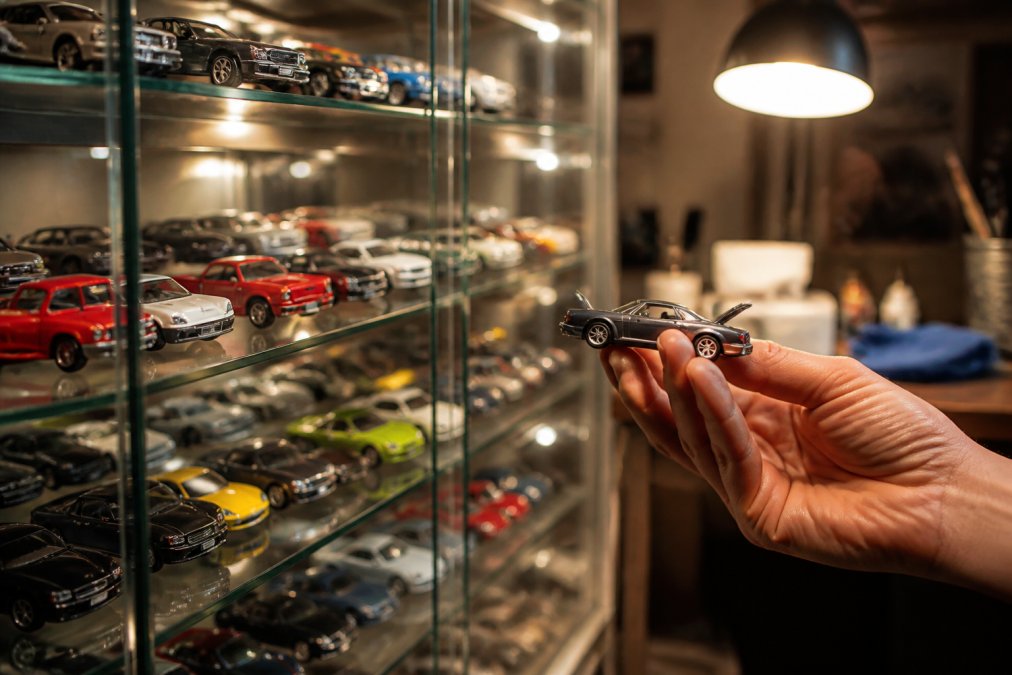
For loose models, individual display cases offer the best protection. Keep your display area away from direct sunlight, which fades paint finishes over time.
Display Options: From Budget to Collector-Grade
Your display choice affects both protection and how you enjoy the collection. The most common options for 1:64 scale collectors are:
- Individual hard plastic cases: These are the standard for loose models. They protect against dust and accidental knocks. Look for cases with a clear, scratch-resistant plastic and a snug fit. Prices range from $1 to $3 per case depending on quality.
- Acrylic display shelves with individual slots: These are designed specifically for 1:64 models and allow you to see the entire collection at a glance. They are more expensive but offer the best protection for loose models.
- Wall-mounted display cabinets: For larger collections, a glass-front cabinet keeps dust out while providing a clean presentation. Avoid cabinets with open backs or gaps where dust can enter.
- Original packaging on shelves: Many collectors keep models carded and display them in shallow shelves or bins. This preserves value but takes up more space and makes the models harder to view from all angles.
A common mistake is using a single open shelf for loose models, exposing them to dust, UV light, and accidental bumps.
Maintenance for Beginners: Beyond Dusting
Maintenance for beginners is straightforward. Dust models monthly with a soft brush, and avoid harsh cleaning chemicals that can strip tampos.
The Unique Angle: Basic Restoration for New Collectors
New collectors often receive a model with a loose axle or a paint chip and do not know their options. Here is a practical, beginner-safe restoration routine:
- Fixing a loose axle: Place the model on a hard, flat surface. Use a small hammer or the flat end of a metal screwdriver handle to gently tap the exposed end of the axle. The goal is to seat the axle deeper into the chassis slot. Tap lightly and test the wheel roll after each tap. Over-tapping can bend the axle, so proceed slowly.
- Touching up paint chips: For small chips on the body, use a fine-tip brush and enamel model paint matched to the original color. Apply a single thin layer, let it dry completely, and assess if a second coat is needed. Do not use acrylic paints, which do not adhere well to diecast metal.
- Replacing a missing side mirror or wiper: These small plastic parts can break off during shipping. Check online marketplaces or hobby shops for replacement parts. Some sellers offer parts lots specifically for Greenlight models. Glue the replacement with a tiny drop of super glue applied with a pin.
- Cleaning dust from hard-to-reach areas: Use a can of compressed air (the kind used for electronics) to blow dust out of the engine bay or interior. Hold the can upright and use short bursts to avoid moisture buildup.
Environmental Control for Long-Term Preservation
Beyond dusting, the environment plays a critical role in preserving your models. Direct sunlight is the number one enemy, it fades paint and yellows clear plastic over time.
Temperature fluctuations cause metal and plastic to expand and contract at different rates, which can lead to warped baseplates or cracked windows. A stable room temperature between 60°F and 75°F is ideal.
Humidity above 60% can cause rust on exposed metal parts and promote mold growth on cardboard packaging. A simple hygrometer costs under $10 and removes the guesswork.
For carded models, store them upright to prevent the card from bending.
Your First Greenlight Purchase: Where to Start
Your first greenlight purchase should be a model that excites you personally, not just one with strong resale potential. For most beginners, a classic American truck from the 1970s or 1980s offers the best entry point.
The Greenlight 1987 Chevrolet C-10 at $15.00 is an excellent first choice. This CTC Exclusive Edition captures the square-body styling that defined an era, and the limited release nature means it holds value well. The Greenlight 1972 Chevrolet C20 - Gentle Ben at $10.00 offers a more budget-friendly option with the charm of classic television nostalgia.

| Model | Price | Best For | Key Feature |
|---|---|---|---|
| 1987 Chevrolet C-10 | $15.00 | Serious collectors | CTC Exclusive Edition |
| 1985 GMC High Sierra | $10.00 | Racing fans | Indy Hauler livery |
| 1972 C20 Gentle Ben | $10.00 | TV nostalgia | Classic series theme |
| 1972 K-10 AM/PM Boss | $8.00 | Custom truck fans | Period graphics |
When buying online, prioritize retailers who ship factory-sealed products. This guarantees you receive the model in its original condition, protecting both authenticity and value. At childrenstoycloset.com, every Greenlight model ships factory-sealed.

Starting a Greenlight collection rewards patience and attention to detail. The learning curve is gentle, but the payoff comes from building a cohesive, well-maintained set that reflects your personal taste in American automotive history. At childrenstoycloset.com, we specialize in factory-sealed Greenlight models, ensuring your collection starts with authentic, pristine pieces. Greenlight's official production and series information provides additional background on upcoming releases. Browse our Greenlight selection and make your first purchase with confidence in the product condition and authenticity of every model.
Frequently Asked Questions
How rare are Greenlight Green Machines?
Green Machines are limited to a production run of 500 pieces per casting. This makes them significantly rarer than standard releases and even most chase cars. They are distributed randomly in sealed cases, so finding one requires luck or buying from a seller who opens cases. Because of the low production number, they hold strong value in the collector community.
Is Greenlight Collectibles a good brand?
Yes, Greenlight is a solid brand for beginners. They offer a wide range of licensed vehicles, from Hollywood cars to everyday trucks, at an accessible price point. While their quality control is not always perfect, their attention to detail and variety of series makes them a popular choice. The brand also produces limited edition and chase pieces, which adds excitement to collecting Greenlight models.
What is the best way to store and display Greenlight diecast cars?
For mint condition collecting, store models in their original blister packs inside a protective case to prevent dust and damage. If you prefer loose models, use a display case with individual slots. Keep them out of direct sunlight to prevent paint fade. Handle models by the base plate to avoid leaving fingerprints on the paint finish.
Are Greenlight models a good investment for new collectors?
Some Greenlight models, particularly limited edition runs and chase cars, can appreciate in value over time. However, collecting should start with what you enjoy. Focus on series you like, such as Retro Entertainment or Hollywood series. If you choose wisely, such as picking up a Greenlight CTC Exclusive 1987 Chevrolet C-10, you can build a collection that is personally satisfying.