

Table of Contents
- Why Disney Cars Diecast Still Pulls Collectors In
- Disney Cars Diecast Checklist: What to Collect First
- Identifying Fake Disney Cars Diecast Before You Buy
- How to Store Diecast Cars So They Keep Their Value
- Grading, Packaging and What Counts as Mint
- Budgeting and Tracking Your Collection
- Display and Photography: Showing Off Without Damage
- Conclusion
- Frequently Asked Questions
Last Updated: September 20, 2026
Why Disney Cars Diecast Still Pulls Collectors In
Twenty years after the first film hit cinemas, collecting Disney Cars for beginners remains one of the most welcoming entry points in the diecast hobby. This guide from childrenstoycloset.com covers what to buy, how to spot fakes, and how to store your models so they hold value.
Disney Cars Diecast Checklist: What to Collect First
Start with a theme, not a shopping list. Most beginners do best choosing one of three paths: main characters, a single film's cast, or anniversary and limited releases.
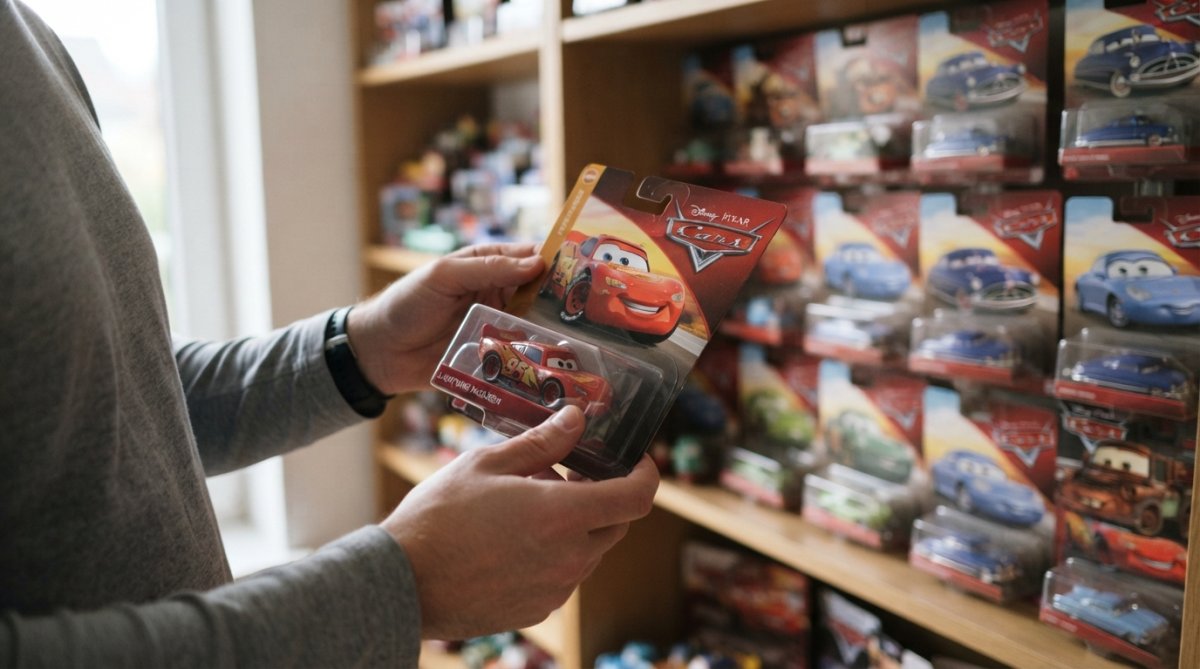
Scales, Series and Character Lineups Explained
Disney Cars diecast is Mattel's range of character vehicles modelled on the Pixar films, sold in scales such as 1:55. Three things decide what a model is worth to you:
- Scale: 1:55 is the standard mainline size and the easiest to display consistently
- Series: mainline, anniversary, and store-exclusive waves all sit under the same brand
- Character: Lightning McQueen and Mater appear constantly; minor townspeople appear once
Where to Buy Disney Cars Diecast
A practical starting checklist:
- Pick a theme: main characters, one film, or anniversary sets
- Set a per-car budget before you browse
- Confirm scale and series on the listing
- Check photos of the actual card, not stock images
- Ask whether the item is factory-sealed
- Log the purchase in a simple inventory sheet
Sets like the Disney Pixar Cars 2026 20 Year Anniversary Card 2 pack Maddy McGear & Lightning McQueen Diecast Model Cars pair a next-generation character with the franchise lead in 1:55 scale diecast on a commemorative card, exactly the kind of set that gives a new collection a spine.

Identifying Fake Disney Cars Diecast Before You Buy
Counterfeit and repackaged Disney Cars diecast is the single biggest money-loser for beginners, and most guides gloss over it with a vague "check the packaging" warning. Here's a repeatable authentication routine you can run in about a minute.
The Three Types of Fakes You'll Actually Encounter
Not every bad buy is a counterfeit. Beginners lose money to three distinct problems, each needing a different check:
- Counterfeit (bootleg): A model made by an unauthorized factory, often sold loose or in a printed bag. The casting is usually slightly off-scale, the tampos are misaligned, and the base plate lacks the correct Mattel stamping.
- Resealed card: A genuine model that was opened, played with, and glued back onto a card. The car may be fine, but the packaging grade is destroyed and the seller is misrepresenting it as mint.
- Repackaged swap: A common model placed on a rare model's card. The card is genuine, the car is genuine, but they don't belong together. This is the hardest to spot and the most common on marketplace listings.
The 60-Second Authentication Routine
Work through these in order. If any step fails, walk away, there are always more cars.
- Blister pack seal. Factory seals are even, machine-applied, and consistent around the perimeter. Resealed cards show lifting at one corner, glue residue, a wavy edge, or a blister sitting proud of the card. Run your fingernail along the seal; a factory seal is smooth, a resealed one catches.
- Card print quality. Fonts should be crisp, colors consistent, and character art free of pixelation. Counterfeit cards often have muddy colors, a logo a shade off, or text a fraction too bold. Compare against a known-good card if you can.
- Tampos (printed graphics). Printed graphics should sit straight and fully within their outlines. Misaligned eyes, a crooked Rust-eze logo, or paint bleeding past the tampo edge are warning signs. On genuine mainline cars, tampos are sharp and centered.
- Base plate. Flip the car over. Genuine Mattel Disney Cars diecast have a stamped base plate with the Mattel logo, character name, and often a date or series code. Counterfeits frequently have a blank base, a misspelled name, or a wrong-shaped logo.
- Paint and casting. Thin or patchy paint around the wheel arches, a casting slightly off 1:55 scale, or wheels that don't roll smoothly all signal a bootleg. Genuine mainline cars have consistent paint coverage and free-rolling wheels.
- Seller history. A seller who can't describe packaging accurately, won't send photos of the actual item, or prices a "rare" car far below market is one to skip. Ask directly: "Is this factory-sealed, and can you send a photo of the blister seal?"
The Swap Check: Matching Car to Card
Repackaged swaps are the hardest fakes to catch because both car and card are genuine, the tell is the mismatch. Check the character name on the card against the base plate stamp, and the series name against the series code on the base. If a card says "Lightning McQueen" but the base says "Mater," it's a swap. This happens most with anniversary and store-exclusive cards, where the card is worth more than the car.

How to Store Diecast Cars So They Keep Their Value
Storage decides whether your collection holds value or quietly degrades, but the right storage depends on what you're storing. Most guides treat every Disney Cars diecast the same, which is why so many beginners damage their best pieces. First question: is this a toy or a collectible?
Toy-Grade vs. Collector-Grade: The Distinction That Saves Collections
Disney Cars diecast spans two very different products, and they need different handling:
Disney Pixar Cars 2026-20 Year →
- Toy-grade (mainline play cars): Sold in open packaging or simple carded singles, designed for kids to handle. These are durable, replaceable, and safe to play with. Store them in a bin or on an open shelf. If one gets scratched, it's not a loss.
- Collector-grade (anniversary sets, store exclusives, limited runs): Sold on commemorative cards, often in 2-packs or special series. These are fragile at the card and blister, and their value depends on staying sealed and undamaged. Store them upright in rigid protectors, away from handling.
The Four Enemies, In Order
- Light. UV fades paint and yellows card stock. Keep shelves out of direct sun; fading is permanent. A north-facing room or a shelf away from windows is ideal.
- Heat. Fluctuating temperatures warp cards and can soften plastic blisters. Avoid attics, garages, and anywhere near radiators. A steady room temperature beats any expensive accessory.
- Moisture. Damp basements and sheds cause mold on card stock and corrosion on metal bases. If you must store in a basement, use sealed plastic bins with desiccant packs.
- Handling. Oils from fingers transfer to paint and card stock. Hold carded items by the card edges, never the blister. For loose models, hold by the base, not the body.
Storage by Format
- Carded collector-grade: Stand upright in rigid card protectors or a carded-car case. Never stack them flat, weight creases the cards. Keep them in a stable room, not a garage.
- Loose collector-grade: A display case with a lid, not an open shelf where dust settles into the tampos. If you don't have a case, a covered plastic bin with a soft lining works.
- Loose toy-grade: An open bin is fine. Sort by character or film so kids can find what they want without dumping the whole bin.
Digital Inventory: The Step Most Beginners Skip
The single most useful storage habit isn't physical, it's digital. A simple inventory stops duplicate buys, spots gaps in a themed set, and protects you at resale.
| Approach | Cost | Best For |
|---|---|---|
| Spreadsheet | Free | Beginners tracking under 100 cars |
| Collector app | Low monthly cost | Larger collections with photos |
| Paper log | Free | Older carded sets kept boxed |
Grading, Packaging and What Counts as Mint
"Mint" means the item looks as it did on the shelf, and grading separates packaging condition from the model itself. Be careful with sellers who blur those two categories.
| Grade | Packaging | Model | Typical Use |
|---|---|---|---|
| Mint in box | Factory-sealed, no creasing | No paint chips or tampos damage | Display and resale |
| Near mint | Minor shelf wear on card | Clean, tiny imperfections | Display |
| Loose, excellent | Opened, card discarded | No visible damage | Safe play and photography |
| Played with | Opened or damaged | Paint chips, worn tampos | Play only |
Budgeting and Tracking Your Collection
A written budget and a simple inventory stop a hobby turning into clutter. Decide a monthly figure, stick to it, and record every purchase the day it arrives.
| Approach | Cost | Best For |
|---|---|---|
| Spreadsheet | Free | Beginners tracking under 100 cars |
| Collector app | Low monthly cost | Larger collections with photos |
| Paper log | Free | Older carded sets kept boxed |
Display and Photography: Showing Off Without Damage
Display and photography are where most beginners accidentally damage their own collection. Both are safe if you handle models by the base and keep them out of sunlight.
Conclusion
The hard part of this hobby isn't finding cars, it's resisting the urge to buy everything at once, where most beginners lose both money and shelf space. Pick a theme, verify condition before you pay, and store what you buy properly.
Frequently Asked Questions
What Disney Cars diecast models are worth money?
Value comes down to production run and packaging, not just the character. Short-run releases, retailer exclusives and chase variants in mint condition with an unopened blister pack or card tend to hold the most value. Older first-series releases and sealed 20th Anniversary 2-packs, like the Buzz Lightyear and Woody crossover set, are the ones collectors watch closely. Check recent sold listings rather than asking prices before you treat any model as an investment.
How do I start collecting Disney Pixar Cars on a small budget?
Pick one lane first. Choose a single character, a single series such as the 20th Anniversary line, or a single scale like 1:55, and buy only within it for the first few months. Two-packs priced around $19 to $30 give you two models per purchase and keep spending predictable. Add a simple inventory checklist so you do not buy duplicates, and set a monthly cap before you browse.
How can I tell if a Disney Cars diecast is authentic?
Start with the base plate. Genuine Mattel Disney Pixar Cars castings carry a clean copyright line, the character name and a production code stamped into the metal. Check the tampos, the printed graphics, for sharp edges and correct colours, since fakes often look slightly blurry or misaligned. Then inspect the card or blister pack for crisp printing and a straight, undamaged seal. Loose vs carded matters here: an opened model loses both proof and value.
What is the best way to store and display diecast cars?
Keep them out of direct sunlight, because UV exposure fades paint and yellows plastic windows. Store carded models upright in acid-free boxes in a room with stable temperature and low humidity, and avoid garages or attics. For display, use a closed display case rather than an open shelf so dust and paint chips stay off the surface. Handle models by the base plate, not the body, and keep a written inventory checklist of what you own and where it sits.
Are Disney Cars diecast models safe to play with or should they stay sealed?
It depends on why you bought them. If you want resale value and grading potential, keep them sealed in the blister pack or on the anniversary card. If the model is a gift for a child, open it and let it be played with, since 1:55 diecast is built for that. A workable middle ground is buying two of a favourite: one to open and one to keep carded.
How do I photograph my Disney Cars collection without damaging it?
Use natural daylight from a window rather than flash, which creates glare on plastic windows and chrome. Place models on a matte surface so reflections do not compete with the paint, and shoot from just above eye level to show the tampos and base plate clearly. Never tape or clip a model to hold it in place, and put it straight back into its case or box afterwards. Photograph before and after any cleaning so you have a record of condition.