

Table of Contents
- Why Factory Sealed Hot Wheels Cases Are Worth the Premium
- How to Spot Resealed Hot Wheels Cases Before You Pay
- Hot Wheels Case Codes: Decode What's Inside Before You Buy
- Understanding Case Mixes, Assortments, and Duplicate Cars
- Treasure Hunts and Super Treasure Hunts: What to Look For
- 2025 Super Treasure Hunt Picks Worth Buying Sealed
- International Shipping and Packaging Integrity for Sealed Cases
- Frequently Asked Questions
Last Updated: September 17, 2026
Why Factory Sealed Hot Wheels Cases Are Worth the Premium
Buying factory sealed Hot Wheels online comes down to one question: is the sealed box worth the markup? For most serious collectors, yes, it comes down to provenance. A factory sealed case is the only format that proves a car was never handled, swapped, or resealed by a middleman. This guide from childrenstoycloset.com breaks down how to buy sealed cases without getting burned.

What Factory Sealed Actually Means
Factory sealed means the case left the production line with its original manufacturer tape, glue seam, and case code intact, never opened by a retailer, reseller, or collector. It is not the same as "mint condition," which only describes the car inside.
- The case tape matches the manufacturer's original application, with no lift marks or double layers
- The case code printed on the box matches the assortment the seller claims is inside
Mint Condition vs. Opened: The Value Gap
Mint condition describes an unplayed-with car; factory sealed describes an untouched case. The market prices them differently because a loose mint car can always be swapped or misrepresented, while a sealed case removes that doubt, nobody has had the chance to cherry-pick it.
How to Spot Resealed Hot Wheels Cases Before You Pay
The fastest way to lose money in this hobby is buying a case that was opened, picked clean, and taped shut again. Resealing is common on the secondary market, and usually obvious once you know where to look.
Tape, Seams, and Sticker Checks
Run these checks before any payment clears:
- Tape texture: Original factory tape sits flat and clear, with straight edges. Resealed tape often shows bubbles, wrinkles, or a second layer underneath.
- Seam integrity: Look at the cardboard seam along the bottom and sides. A lifted flap leaves a faint crease or torn fibre that never fully disappears.
- Sticker placement: On sealed Super Treasure Hunt stock, the factory sticker sits square and centred. Reapplied stickers are usually a few degrees off or sit on top of old adhesive residue.
- Weight and shake test: A full 72-count case has a consistent heft. If it feels light or the contents shift oddly, ask why.
A common mistake is trusting photos alone. Ask for a short video showing the tape edge in raking light.
Hot Wheels Case Codes: Decode What's Inside Before You Buy
Case codes are the letters and numbers printed on the outside of a Hot Wheels case, telling you which assortment and which point in the production run that box came from. Reading them is the difference between buying blind and buying with intent.

| What You're Checking | Where to Find It | Why It Matters |
|---|---|---|
| Case letter | Printed on the box side panel | Shows position in the year's release run |
| Assortment number | Beside the case letter | Confirms the mix of cars inside |
| Factory sticker | On sealed STH stock | Verifies authenticity, never opened |
| Tape seam | Top and bottom flaps | Confirms the case was not resealed |
Understanding Case Mixes, Assortments, and Duplicate Cars
Every sealed case contains a fixed mix determined by the manufacturer, not the seller. A standard 72-count case repeats certain castings by design, so duplicates are normal, not a defect.
How a 72-Count Case Is Structured
A mainline 72-count case is not 72 unique cars. It is a curated assortment packed at fixed ratios, typically roughly 50 to 60 distinct castings, with the remainder duplicates of the most common models. The ratio is set by the assortment number, not the retailer or reseller.
- Duplicates are built in. Pulling three of the same fantasy casting is not a defect, that is the assortment working as designed.
- Rare castings are diluted. A desirable mainline casting may appear only once or twice in a full case, so opening a case is a hunt, not a guarantee.
- Two cases with the same count can differ. A 72-count case from one assortment number and one from another can share almost no castings. Count alone tells you nothing.
Assortment Numbers vs. Case Letters
These are two different pieces of information printed on the same box, and conflating them is a common mistake.
- The assortment number identifies the specific mix of castings packed into that case, the more precise identifier of what is inside.
- The case letter identifies where in the model year's production run that case sits, a rough proxy for which releases are likely present, not a guarantee.
| What You're Checking | Where to Find It | What It Actually Tells You |
|---|---|---|
| Case letter | Printed on the box side panel | Rough position in the year's release run |
| Assortment number | Beside the case letter | The specific mix of castings packed inside |
| Count (e.g., 72) | Box label | Total units, not variety |
| Factory sticker | On sealed STH stock | Authenticity marker, not a contents guide |
Why This Matters Before You Commit
If your goal is a specific casting, buy the single car, not a case. No case letter or assortment number guarantees a particular model, because the manufacturer controls the mix and inserts chase pieces at its own rate. If your goal is the hunt and the sealed provenance, a case is the right purchase, but go in knowing you are buying a defined mix, not a mystery box.
The Duplicate Question, Answered Plainly
Collectors new to sealed cases often assume duplicates signal a problem. They do not, duplicates are the predictable output of a fixed-ratio assortment. The real question is whether the assortment number matches the castings you want. Check it against a published case breakdown before you buy.
Treasure Hunts and Super Treasure Hunts: What to Look For
A Treasure Hunt is a limited mainline release marked with a flame logo on the card. A Super Treasure Hunt is the rarer tier, carrying Spectraflame paint, Real Rider rubber tires, and a "TH" logo, inserted into cases at a much lower rate.
2025 Super Treasure Hunt Picks Worth Buying Sealed
Not every STH holds its premium equally. The castings below combine genuine motorsport or cultural significance with the premium finish that keeps sealed examples in demand.
Hot Wheels Super Treasure Hunt 2025 →
'73 Honda Civic Custom and '20 Dodge Charger Hellcat
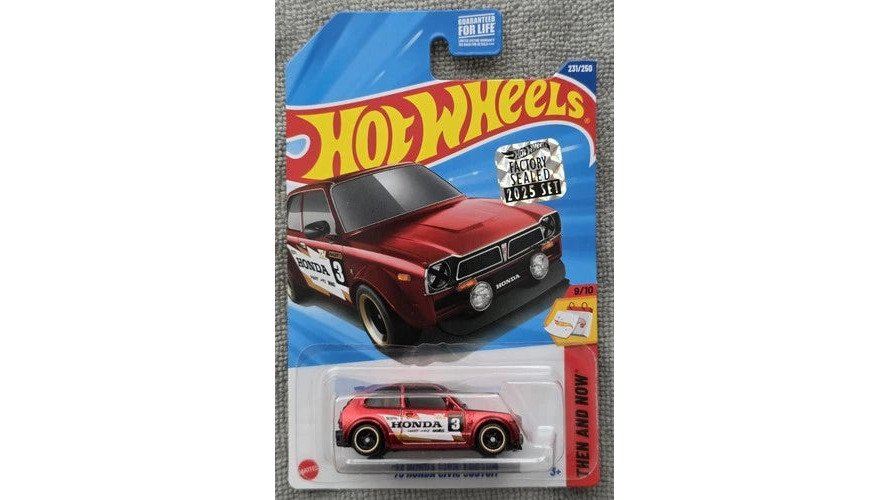
The '73 Honda Civic Custom taps the JDM collector base directly, and the first-generation Civic casting has a following that predates its STH release. The Hot Wheels Super Treasure Hunt 2025 '20 Dodge Charger Hellcat leans on American muscle appeal with a supercharged V8 silhouette that sells to two collector groups at once.
Ford RS200, Porsche 911 Rallye, and '87 Audi Quattro
Rally castings dominate the strongest 2025 picks. The Hot Wheels 2025 Super Treasure Hunt Ford RS200 carries genuine Group B heritage, a category that attracts performance car collectors who do not normally chase diecast. The Porsche 911 Rallye and the '87 Audi Quattro round out the group, both air-cooled-era icons with strong display appeal.

International Shipping and Packaging Integrity for Sealed Cases
A sealed case only holds its value if it arrives sealed. International shipping is where that breaks down most often, and packaging is only one variable. The bigger gap most guides ignore is logistics: how the case gets from a foreign warehouse to your door without the seal, the corners, or your budget taking damage.
Packaging Integrity: What to Confirm Before Ordering
What to confirm before ordering cross-border:
- The case ships inside a rigid outer box, not a soft mailer
- Tape seams are protected from compression, which causes flaps to lift in transit
- The seller documents the case condition before dispatch, so damage claims are provable
- Corners are reinforced, because a crushed corner on a sealed case is a permanent value hit
The Freight-Forwarding Route Most Collectors Miss
When a seller will not ship internationally, or direct quotes come back higher than the case itself, a freight forwarder or consolidation service is the standard workaround: the seller ships domestically to a forwarder's warehouse, the forwarder consolidates your order with others, and it ships onward as a single international parcel.
What this changes for a sealed-case buyer:
- Consolidation lowers per-unit shipping. Combining several cases or single cars into one forwarder shipment spreads the international leg across more items.
- You control the outer packaging. Many forwarders offer repacking, letting you specify a rigid outer box even if the original seller would not.
- You take on the customs role. The forwarder ships; you are the importer of record, so duties and taxes land on you.
Landed Cost: The Number That Actually Matters
The sticker price of a sealed case is not what you pay. Landed cost is the case price plus international shipping plus any customs duty, import tax, or handling fee your country applies. Two sellers quoting the same case price can differ sharply once landed cost is calculated.
A practical way to compare:
- Get the case price and domestic-to-forwarder shipping from the seller.
- Get the forwarder's international rate for the consolidated weight.
- Estimate duty and tax using your country's threshold for collectible toys.
- Add any forwarder handling or repacking fee.
Customs, Declarations, and the Seal
Customs inspection is the one step that can physically break a seal. A correctly declared parcel with clear contents documentation usually passes through without opening, but inspection is always possible and outside your control. Two habits reduce the risk:
- Declare the contents accurately. Misdeclaration invites inspection and delays.
- Photograph the sealed case before it leaves the forwarder, so you have proof of condition at the last point you controlled.
Frequently Asked Questions
Are factory sealed Hot Wheels worth more than opened ones?
Yes. Factory sealed Hot Wheels hold higher collector value because the seal proves the car was never handled, displayed, or tampered with. A Super Treasure Hunt with its factory sealed sticker intact commands a clear premium over the same casting pulled from an opened case. Sealed condition also protects the card edges and Spectraflame finish during storage, which matters most for investment-grade pieces.
How do I verify a factory sealed Hot Wheels case online?
Ask for close-up photos of the tape seam, the case letter printed on the box, and the Super TH sticker if one is claimed. Genuine factory tape sits flat with no lifting edges or residue. Cross-check the case code against the year and assortment it should belong to. A seller who cannot show these details is a risk.
What are Hot Wheels case codes and why do they matter?
A case code is the letter and number printed on the box that identifies the assortment and production run. The letter tells you which mix of cars is inside, and the number ties it to a specific release window. Collectors use case codes to predict whether a treasure hunt or super treasure hunt may be present, and to confirm a sealed case matches the listing before buying.
What are the risks of buying factory sealed cases online?
The main risks are resealed boxes sold as factory sealed and listings that show stock photos instead of the actual case. Shipping damage is another concern, since crushed corners lower collector value.
Can I find super treasure hunts in a sealed 72-count case?
Super treasure hunts are produced in limited quantities and inserted randomly into mainline cases, so a sealed case may or may not contain one. That randomness is part of the appeal. If you want a guaranteed super treasure hunt without gambling on a case, buying the specific sealed car, such as a 2025 STH with the factory sticker intact, is the more direct route.